
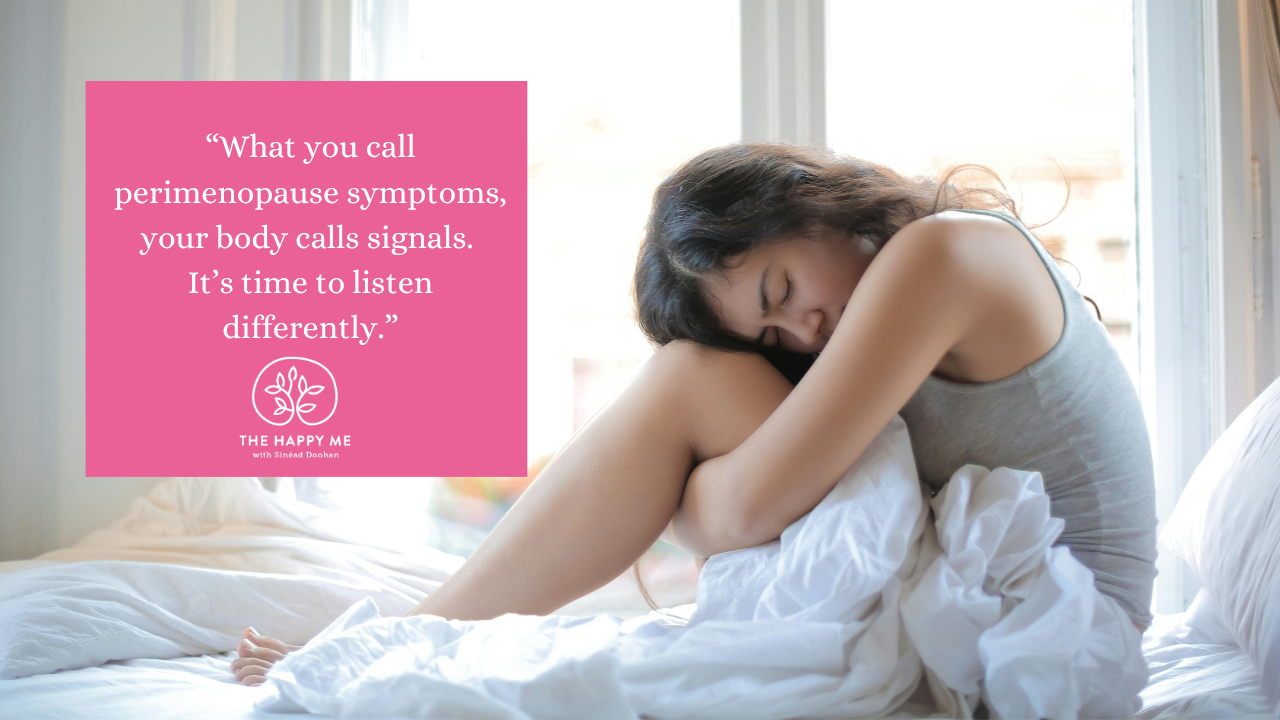
Is It Really Perimenopause or Is Stress Finally Catching Up?
Davina McCall’s book and documentaries have opened up an important conversation about perimenopause. Yet, as more women share their stories, the deep connection between perimenopause and stress is becoming impossible to ignore.
However, here is a question worth asking: are we reaching for HRT too quickly, blaming hormones for everything from anxiety to exhaustion, when the real story might have started long before oestrogen ever dropped?
The Unspoken Load Women Carry – during perimenopause
For decades, many professional women have been silently carrying heavy, invisible burdens:
- People-pleasing to avoid conflict.
- Feeling “not good enough,” no matter the success.
- Silencing anger or disappointment to keep the peace.
- Holding it all together at home and at work, often without support.
When we reach perimenopause, it can feel like adding one more weight to an already full load. By our forties, the emotional and physical strain many women carry is close to overflowing. Then perimenopause arrives. Hormones shift. Oestrogen starts to decline. Suddenly, the nervous system feels even less stable. The pot boils over, and perimenopause takes the blame. But was it really only about hormones?
Stress and Hormones: A Two-Way Street
Science shows that perimenopause and stress are deeply interconnected, each influencing how the other behaves.
Evidence:
- Epperson et al., Neuropsychopharmacology (2014): 17β-estradiol regulates stress circuitry in the brain.
- Albert et al., Frontiers in Neuroendocrinology (2022): Estrogen fluctuations modulate stress sensitivity and mood.
- Kuhlman et al., Psychoneuroendocrinology (2021): Chronic stress alters HPA–HPG (stress–sex hormone) interaction.
When cortisol, the body’s main stress hormone, remains elevated for long periods, research suggests it can influence how oestrogen functions and interacts with the brain’s stress response systems (Estradiol Therapy and Stress Response, Journal of Clinical Endocrinology & Metabolism, 2017; Estrogen, Stress, and Depression Review, Frontiers in Neuroendocrinology, 2022). As oestrogen levels decline, studies show the brain’s stress circuits can become more reactive, increasing sensitivity to anxiety, exhaustion and irritability (17β-Estradiol Differentially Regulates Stress Circuitry, Neuropsychopharmacology, 2014)
In other words, stress makes hormonal changes harder. Hormonal changes make stress harder. Together, they create the perfect storm.
Perimenopause and Insomnia: The Overlooked Link
One of the most-searched yet under-discussed symptoms of perimenopause is insomnia.
Research shows that up to 60% of women in midlife report sleep problems (Sleep Medicine Reviews, 2020) Lack of sleep worsens anxiety, mood swings and cognitive function, often the very symptoms blamed on declining oestrogen. Research also shows that chronic stress is one of the most powerful disruptors of sleep. In fact, elevated stress and activation of the HPA axis can impair deep and REM sleep, especially in those with high sleep reactivity (The Impact of Stress on Sleep). When your nervous system has been running in ‘fight or flight’ mode for years, the decline of hormonal buffers may leave you more vulnerable to sleep disruption (The Effect of Psychosocial Stress on Sleep: A Review of the Literature). Therefore, the real culprit may be the overloaded stress response system, not just perimenopause.
Suggested Tools for a Sleep Reset
These tools focus on calming the nervous system so your body can return to safety and restore natural sleep rhythms.
The Cost of Ignoring Stress
Stress is not just about mood swings or “coping badly.” It has measurable effects on the body.
- According to a 2021 study in JAMA, long-term stress increases cardiovascular risk by up to 60%. (JAMA, 2021). Women already face rising cardiovascular risk after menopause, and stress compounds it.
- Chronic stress is one of the strongest predictors of sleep disturbance and insomnia (Sleep Medicine Reviews, 2020), which up to 60% of midlife women experience.
- High stress does not simply leave you exhausted. It accelerates ageing, disrupts memory and impacts overall longevity (APA, 2023).
In other words, stress does not just make you “feel anxious.” It reshapes how your body functions, interacts with hormones and ages over time.
Where HRT Fits In
HRT can be life-changing, and for some women, absolutely necessary. However, it is not a magic bullet. If we only reach for hormones without addressing the stress, beliefs and emotional load that has been building for decades, we are treating the symptom, not the root cause. Perimenopause may not be the enemy. It might actually be the body’s way of forcing us to stop ignoring what we have carried for far too long.
A New Way to See Perimenopause
Maybe perimenopause is not just about oestrogen. Maybe it is the moment truth finally surfaces, a demand from the body to reset, rewire and release decades of suppressed stress. That is why nervous-system-based approaches matter. Resetting stress patterns not only reduces anxiety and improves sleep, it also helps hormones work better. In fact, clients who came to me with physical issues such as migraines, endometriosis pain and IBS often discovered that the real driver was unresolved emotional load.
🎥 Here are some client case studies showing what happens when the root cause is addressed, not just the surface symptoms:
Final Thought
HRT has its place, and for many women it is life-saving. But if we overlook the decades of stress, self-silencing and people-pleasing that filled the pot long before hormones changed, we risk missing the bigger picture.
Perimenopause does not just strip away oestrogen. It strips away our ability to keep ignoring what we have carried.
👉 The real question is: will we use this time to medicate the overflow, or to finally empty the pot?
Ready to Begin Your Mind Reset?
Check out my programmes here:
👉 The Mind Reset Prescription
👉 Clarity to Calm
Disclaimer: This content is for informational purposes only and does not substitute professional medical advice, diagnosis, or treatment. Always seek the advice of your doctor or qualified health provider with any questions you may have regarding a medical condition or treatment options.